Rental HVAC Maintenance: A Landlord's Complete Guide (2026)
How to maintain HVAC in a rental property — filter schedules, seasonal servicing, what tenants should and shouldn't do, and how to make your systems last 20 years instead of 12.
Rental HVAC Maintenance: A Landlord's Complete Guide (2026)
Short answer: change the filter every 90 days, service the system twice a year (before cooling and heating season), and you'll push a rental HVAC system toward its 20-year potential instead of a 12-year early death. HVAC is the most expensive system in most rentals and the one tenants neglect most — which makes it squarely the landlord's job to stay ahead of.
Why HVAC is a landlord problem, not a tenant one
A new central HVAC system runs $5,000–$12,000+ installed. A neglected one fails early — usually at the worst possible moment (a heat wave, a cold snap, a new tenant's first week). Tenants rarely change filters or notice declining performance until it stops working entirely. If you leave HVAC upkeep to the tenant, you're leaving your most expensive asset to the person with the least incentive to protect it.
The rental HVAC maintenance schedule
| Task | Frequency | Who |
|---|---|---|
| Replace/clean filter | Every 90 days (monthly for cheap filters) | Landlord (don't rely on tenant) |
| Professional tune-up | Spring (AC) + fall (heat) | Pro |
| Clear condensate drain | Seasonal | Landlord/pro |
| Clean outdoor condenser unit | Annual | Landlord/pro |
| Check refrigerant & connections | Annual (during tune-up) | Pro |
Filters: the $40 task that saves $6,000
A clogged filter forces the system to work harder, spikes energy bills, freezes coils, and burns out the compressor early. It's the single highest-ROI maintenance task you have — and the one most likely to be skipped. Put filter changes on a schedule you control, and either handle them yourself or make it explicit and verifiable in the lease.
Seasonal servicing: catch failures before tenants do
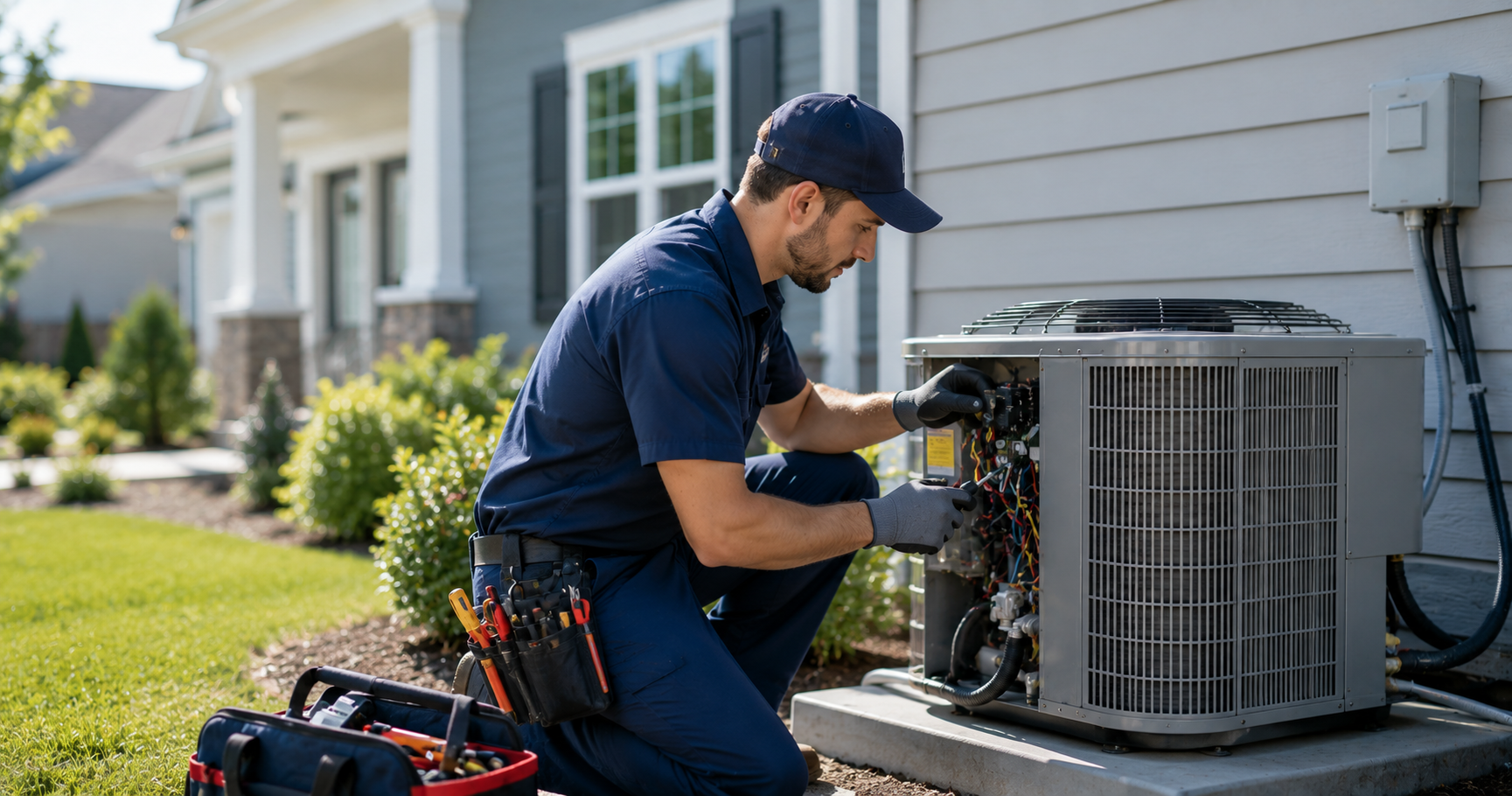
A spring and fall tune-up keeps efficiency high and catches small problems (a weak capacitor, low refrigerant, a failing part) before they become an emergency no-heat or no-cool call. Emergency HVAC service costs more, arrives slower, and comes with an angry tenant attached.
Make it last 20 years, not 12
The difference between a system that dies at 12 and one that runs 20 comes down to three habits: change the filter on schedule, service it twice a year, and keep a record of both. That record also proves — at sale, at turnover, or in a warranty claim — that the system was cared for.
Upkeepify puts HVAC maintenance on autopilot across every property: recurring filter and service reminders, a dated service history per unit, and warranty tracking so you know exactly what's covered. Start free and stop losing HVAC systems to forgotten filters.
Never Forget Rental Maintenance Again
Get automated reminders for all your rental property maintenance tasks. Try Upkeepify free - no credit card required.